
Tell us about your campus website
A senior engineer reads every message and replies within one working day.
Higher-ed web procurement rewards the vendor with the best RFP response, not always the best team. This comparison lays out the four categories of providers universities choose between, what each realistically costs, where each one breaks, and the scoring model that survives a committee review.
What are the options for higher-ed web development?
| Provider type | Typical engagement | Best for | Common failure mode |
|---|---|---|---|
| In-house web team | Quoted for the agreed scope | Continuous improvement, institutional knowledge | Capacity collapses during a full rebuild |
| Boutique senior agency | Quoted for the agreed scope | Rebuilds, design systems, accessibility remediation | Limited bench for a 12-campus system |
| Large digital agency | Quoted for the agreed scope | Multi-campus platforms, formal governance | Senior staff pitch, junior staff build |
| Higher-ed SaaS platform | Quoted for the agreed scope | Small colleges without technical staff | Template ceiling, weak data portability |
Most institutions end up blending: an agency for the rebuild and design system, in-house staff for ongoing publishing and iteration.
How do we compare providers fairly?
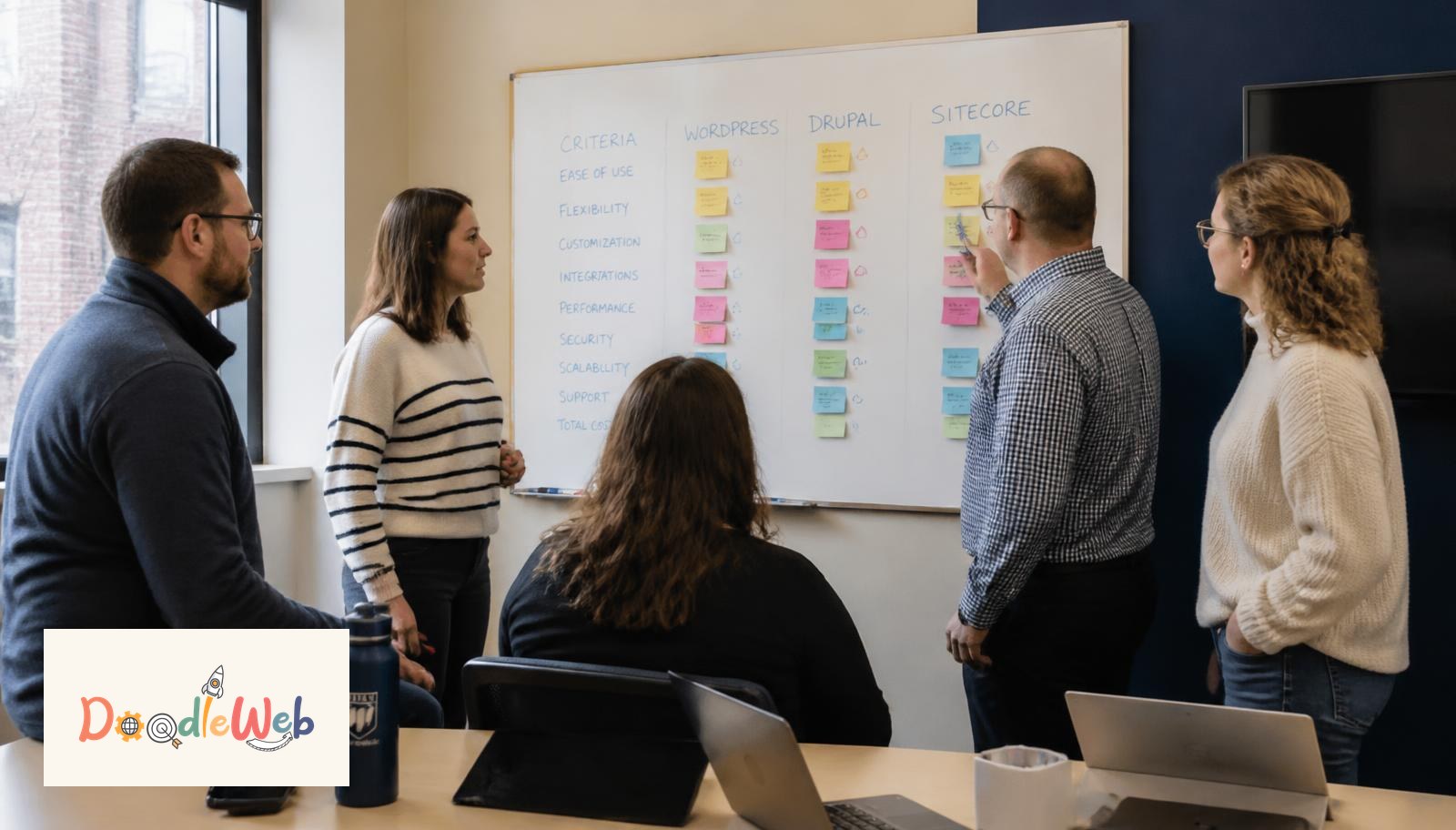
Use a weighted scorecard and fill in the weights before proposals arrive. The percentages below are an editable editorial example, not an independently validated model.
| Criterion | Weight | Evidence to require |
|---|---|---|
| Higher-ed track record | 20% | Two live .edu builds of comparable page count |
| Accessibility practice | 20% | VPAT, manual testing process, remediation SLA |
| Integration experience | 15% | Reference for your SIS and CRM pairing |
| Performance results | 15% | Core Web Vitals field data from their live builds |
| Team composition | 10% | Named seniors with time allocation per week |
| Governance and training | 10% | Editor enablement plan, template limits |
| Five-year cost | 10% | Build plus hosting plus expected change requests |
Ask for Core Web Vitals field data, not lab scores. Anyone can pass Lighthouse on a laptop.
What do higher-ed web services cost?
| Service | Small college | Mid-size university | Multi-campus system |
|---|---|---|---|
| Full rebuild | Quoted for the agreed scope | Quoted for the agreed scope | Quoted for the agreed scope |
| Design system only | Quoted for the agreed scope | Quoted for the agreed scope | Quoted for the agreed scope |
| Accessibility remediation | Quoted for the agreed scope | Quoted for the agreed scope | Quoted for the agreed scope |
| CMS migration | Quoted for the agreed scope | Quoted for the agreed scope | Quoted for the agreed scope |
| Ongoing care and support | Quoted for the agreed scope | Quoted for the agreed scope | Quoted for the agreed scope |
Measure this with your own visitor and payment records before forecasting an outcome; no verified universal uplift is available for this recommendation. Institutions that skip this line spend it anyway, just in emergency change orders.
Which services matter most for enrollment?
Suggested priorities to test against your institution's inquiry and application data:
- Program page speed and clarity, since these are the pages prospects actually land on
- A short, mobile-first RFI form wired into the CRM
- Search that returns useful results for program names and abbreviations
- Accessible, scannable program content with outcomes and cost stated plainly
- Structured data so programs surface in AI answers and search features
Compare these tasks with your homepage and other priorities using observed visitor behavior, not an assumed impact ranking.
Should we hire one vendor or split the work?
Splitting design, build, and accessibility across vendors sounds like risk management and usually creates finger-pointing. A defensible split is a single build partner plus an independent accessibility auditor. That keeps accountability clean while giving the committee an objective third-party check.
How do we avoid the bait-and-switch staffing problem?
Put it in the contract. Name the individuals, specify their weekly hours, and require written approval for substitutions. Ask for the resumes of the people who will be on your project in month three, not the pitch team. Boutique senior shops rarely have this problem because the people pitching are the people building.
What should the RFP require?
- WCAG 2.2 AA with a named testing method and remediation window
- Core Web Vitals targets as an acceptance criterion
- Content migration scoped by page count with a redirect map deliverable
- Editor training hours, recorded, plus a written governance model
- Full ownership of code, design files, hosting, and analytics
- A 90-day post-launch warranty
- Optional annual care priced separately so it can be compared
How long should the engagement take?
Twelve to twenty weeks for a small college, six to nine months for a mid-size university, and a year or more for multi-campus systems. Content ownership decisions can be a substantial dependency, so start the inventory in week one, not after the design is approved.
What does DoodleWeb bring to higher ed?
Review the named delivery team, Drupal and WordPress experience, accessibility scope, and proposed performance acceptance criteria with DoodleWeb before contracting. We also publish our approach openly, from what universities need in website development to the higher education CMS guide. See our work and pricing.
Where to go next
Fill in the scorecard weights with your committee before you read a single proposal. It makes priorities explicit and provides a consistent basis for vendor review.
Related reading: why university websites get slow and hard to manage and WordPress to Drupal higher-ed case study. Want an outside review of your shortlist? Contact us.
Frequently asked questions
/What should we review before changing our campus website?
Start with the visitor task, the affected templates, accessibility barriers, publishing workflow, and integrations. Use actual visitor and editor evidence to prioritize the work rather than choosing features first.
/Do we need a full rebuild?
Not necessarily. A focused repair may address the problem if the content model and supported platform are suitable. Compare repair and rebuild scope after documenting the causes and ongoing support requirements.
/How much will the work cost?
The price depends on templates, migration, integrations, accessibility testing, training, and ongoing care. Review DoodleWeb pricing and request an itemized proposal rather than relying on a sector-wide price range.
/Can these changes guarantee more donations or applications?
No. Outcomes also depend on audience, campaign quality, program demand, and other factors. Agree on baseline measurements and review completed visitor tasks after changes.
/How can DoodleWeb help us assess the next step?
Use the contact form on this page to share the site, visitor task, and current constraints. Review the relevant published case study and ask for a scope covering assessment, implementation, testing, and handover.
Relevant client work


Berklee College of Music is a DoodleWeb client. Client recognition alone is not evidence of a particular project outcome.
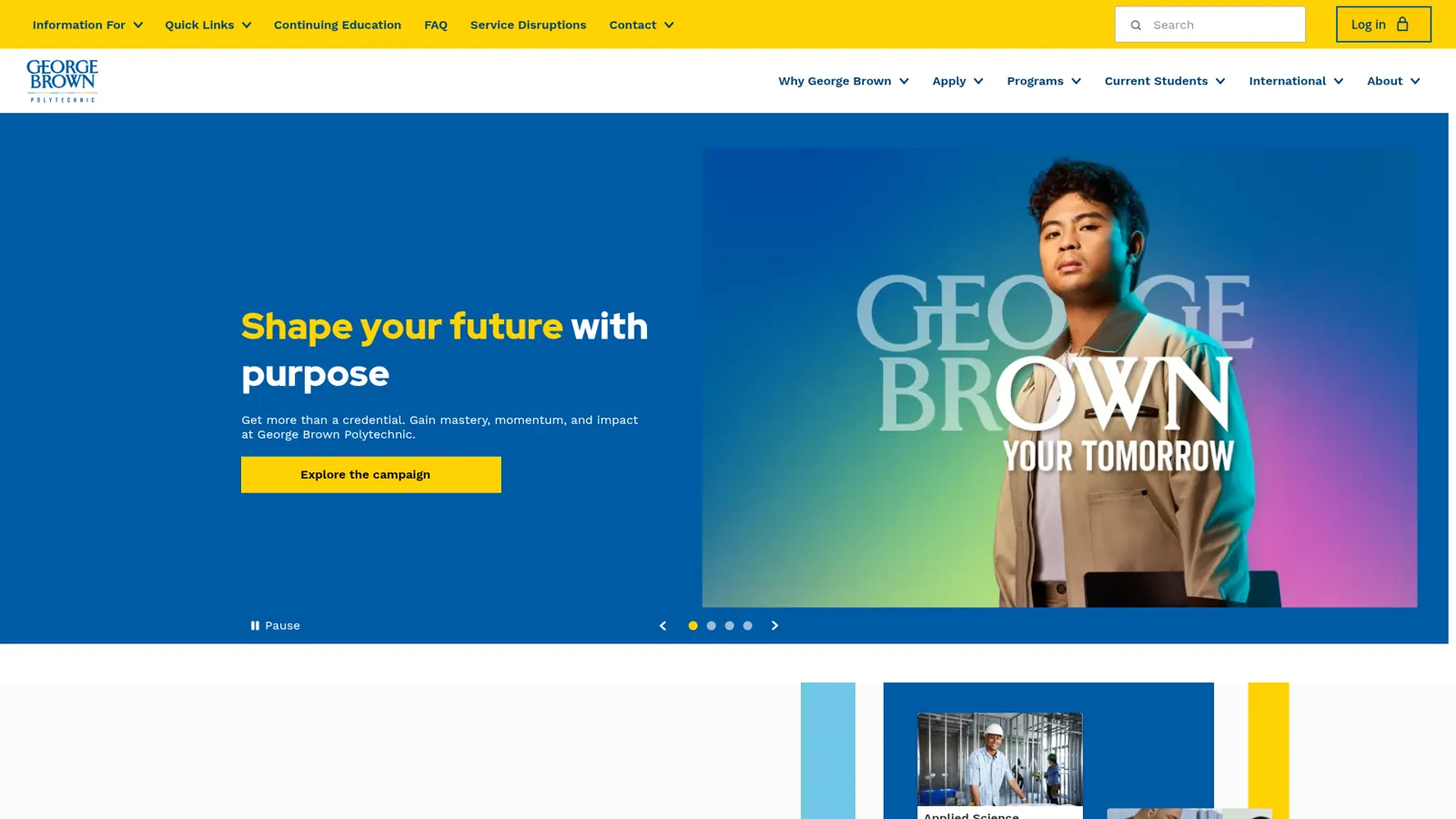
George Brown College: accessibility work
Our published case study describes accessibility audit and remediation work on a Drupal platform, alongside editor training. Review the documented scope rather than assuming the same result for another campus.
Read the case study →A committee needs comparable evidence, not comparable slide decks.
- Request the same program-page and editorial-workflow demonstration from every vendor.
- Identify integration boundaries and which campus team owns each connection.
- Compare migration responsibilities, manual accessibility testing, and ongoing care in writing.
Sources and fact-check report
Reviewed 2026-10-05. Site sources substantiate published project scope and client recognition, not independently audited outcomes. Recommendations are editorial guidance, not revenue, ranking, compliance, price, or delivery guarantees.
- DoodleWeb Brand Book / brand guidelines
- DoodleWeb published identity and client recognition
- Published project scope: George Brown College
- W3C WCAG 2.2: Level AA conformance criteria
- Google web.dev: Core Web Vitals definitions and thresholds
- Reviewed claim: The slowest phase is always content ownership decisions
Resolution:Content ownership decisions can be a substantial dependency
- Reviewed claim: Ranked by measured impact on inquiry and application volume:
Resolution:Suggested priorities to test against your institution's inquiry and application data:
- Reviewed claim: Everything else, including the homepage redesign everyone argues about, moves fewer numbers than these five.
Resolution:Compare these tasks with your homepage and other priorities using observed visitor behavior, not an assumed impact ranking.
- Reviewed claim: It is the single change that most improves higher-ed vendor selection.
Resolution:It makes priorities explicit and provides a consistent basis for vendor review.
- Reviewed claim: | In-house web team | Salaries plus tooling, $180k to $600k/yr | Continuous improvement, institutional knowledge | Capacity collapses during a full rebuild |
Resolution:| In-house web team | Quoted for the agreed scope | Continuous improvement, institutional knowledge | Capacity collapses during a full rebuild |
- Reviewed claim: | Boutique senior agency | $60k to $300k per project | Rebuilds, design systems, accessibility remediation | Limited bench for a 12-campus system |
Resolution:| Boutique senior agency | Quoted for the agreed scope | Rebuilds, design systems, accessibility remediation | Limited bench for a 12-campus system |
- Reviewed claim: | Large digital agency | $300k to $1.2M per project | Multi-campus platforms, formal governance | Senior staff pitch, junior staff build |
Resolution:| Large digital agency | Quoted for the agreed scope | Multi-campus platforms, formal governance | Senior staff pitch, junior staff build |
- Reviewed claim: | Higher-ed SaaS platform | $40k to $200k/yr license | Small colleges without technical staff | Template ceiling, weak data portability |
Resolution:| Higher-ed SaaS platform | Quoted for the agreed scope | Small colleges without technical staff | Template ceiling, weak data portability |
- Reviewed claim: | Full rebuild | $60k to $140k | $150k to $420k | $420k to $1.1M |
Resolution:| Full rebuild | Quoted for the agreed scope | Quoted for the agreed scope | Quoted for the agreed scope |
- Reviewed claim: | Design system only | $25k to $50k | $50k to $110k | $110k to $240k |
Resolution:| Design system only | Quoted for the agreed scope | Quoted for the agreed scope | Quoted for the agreed scope |
- Reviewed claim: | Accessibility remediation | $12k to $35k | $35k to $90k | $90k to $220k |
Resolution:| Accessibility remediation | Quoted for the agreed scope | Quoted for the agreed scope | Quoted for the agreed scope |
- Reviewed claim: | CMS migration | $18k to $45k | $45k to $160k | $160k to $400k |
Resolution:| CMS migration | Quoted for the agreed scope | Quoted for the agreed scope | Quoted for the agreed scope |
- Reviewed claim: | Ongoing care and support | $1.5k to $4k/mo | $4k to $12k/mo | $12k to $30k/mo |
Resolution:| Ongoing care and support | Quoted for the agreed scope | Quoted for the agreed scope | Quoted for the agreed scope |
- Reviewed claim: Budget 15% to 20% of the build as an annual figure for care, iteration, and accessibility monitoring.
Resolution:Measure this with your own visitor and payment records before forecasting an outcome; no verified universal uplift is available for this recommendation.
- Reviewed claim: Use a weighted scorecard and fill in the weights before proposals arrive.
Resolution:Use a weighted scorecard and fill in the weights before proposals arrive. The percentages below are an editable editorial example, not an independently validated model.
- Reviewed claim: Senior-only staffing, Drupal and WordPress depth, accessibility written into the contract, and performance budgets enforced in the build pipeline.
Resolution:Review the named delivery team, Drupal and WordPress experience, accessibility scope, and proposed performance acceptance criteria with DoodleWeb before contracting.
Web Strategy Lead · Seattle, WA
Nick leads discovery and platform selection at DoodleWeb. He has run CMS evaluations and rebuild roadmaps for universities, health systems, and mission-driven organizations across the Puget Sound.